
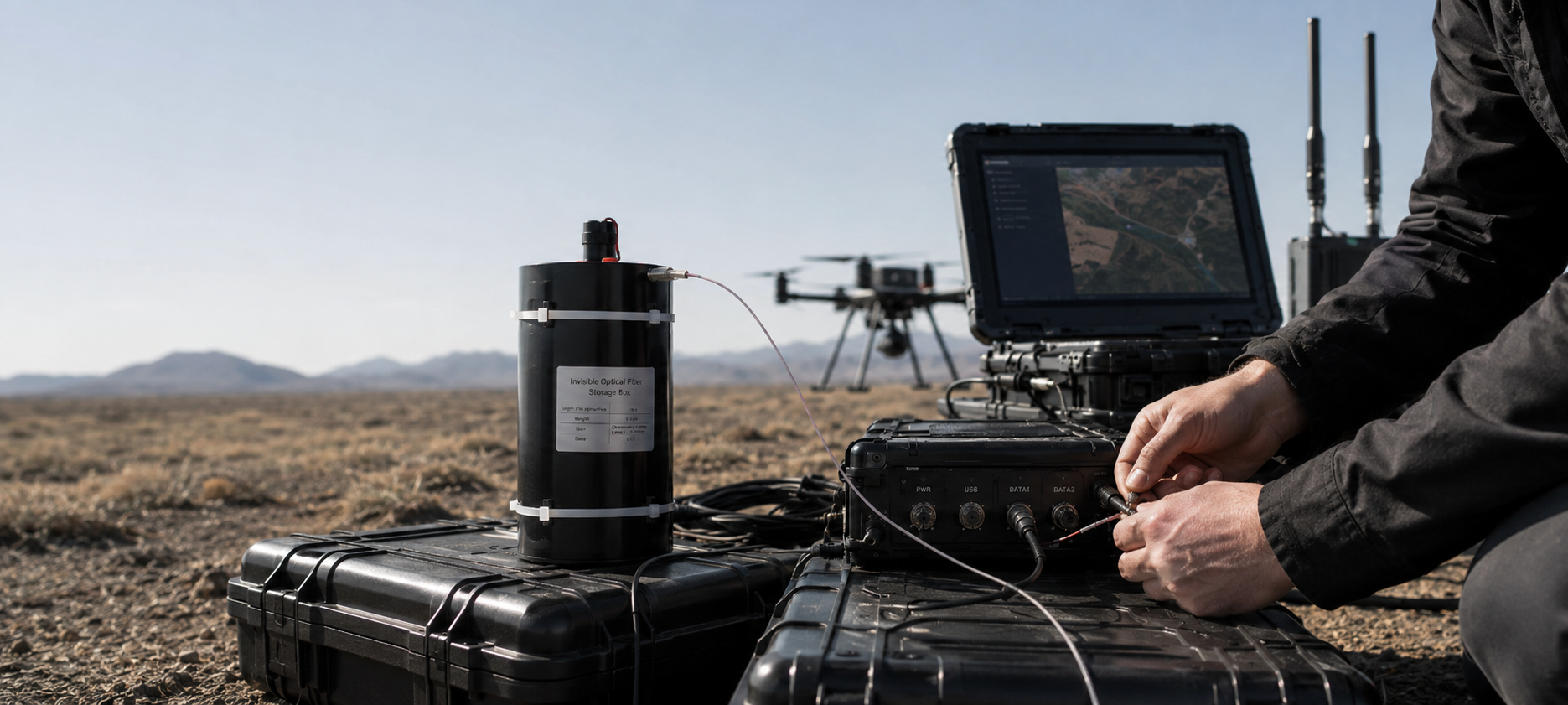
Autonomous UAV Missions Are Not Limited by Intelligence Alone — They Are Limited by Communication Assumptions
The UAV industry is spending heavily on autonomy.
More onboard processing.
More sensing.
More computer vision.
More AI-assisted decision-making.
But in many advanced programs, the limiting factor is no longer onboard intelligence alone.
It is the communication architecture those missions still depend on.
That is the market mistake.
Teams are trying to build smarter missions on top of communication assumptions that were acceptable for simpler operations. They are upgrading the aircraft while leaving the link on older logic.
The result is predictable: a mission that looks advanced on paper but feels fragile in the field.
The industry is over-investing in autonomy and under-investing in the layer autonomy depends on
A highly automated mission still depends on something very basic:
The system has to exchange information cleanly enough to be trusted.
Commands still matter.
Timing still matters.
Mission-state awareness still matters.
Coordination between aircraft, payload, and control side still matters.
Autonomy does not eliminate communication dependency. It raises the standard for it.
Because once a UAV mission becomes more data-rich, more time-sensitive, and more integrated, small instability in the communication layer becomes much more expensive.
A delayed response affects timing.
An uncertain feed affects judgment.
A weak control path affects confidence in what the aircraft is actually doing.
At that point, the problem is not that the aircraft is not intelligent enough.
The problem is that the mission is still relying on a communication layer that behaves like a weak dependency.
Intelligence cannot compensate for communication fragility
There is a common idea behind a lot of “next-generation UAV” messaging:
If the aircraft is smart enough, it can work around communication weakness.
That is not how operational reality works.
A smart aircraft on a fragile communication layer does not feel advanced. It feels harder to trust.
The video may still arrive, but with less confidence.
The aircraft may still respond, but not in a way the operator fully trusts.
The mission may continue, but with more hesitation and more correction than it should.
That matters.
Because advanced missions are not judged by whether they can technically continue. They are judged by whether they can operate with less human intervention, less second-guessing, and more confidence under pressure.
If communication instability keeps forcing the team to compensate, then the mission is not as autonomous as it looks.
The real bottleneck in advanced UAV operations
This is where the category mistake becomes clear.
The market often talks as if autonomy is limited by onboard intelligence. In practice, many missions are limited by something less visible: a communication layer that still behaves like a basic link rather than dependable mission infrastructure.
That is the sharper industry judgment.
The bottleneck is not only what the aircraft can compute.
It is whether the mission system can remain trustworthy when decisions, data, and control need to move with speed and consistency.
That is why communication belongs near the center of autonomy strategy, not at the edge of it.
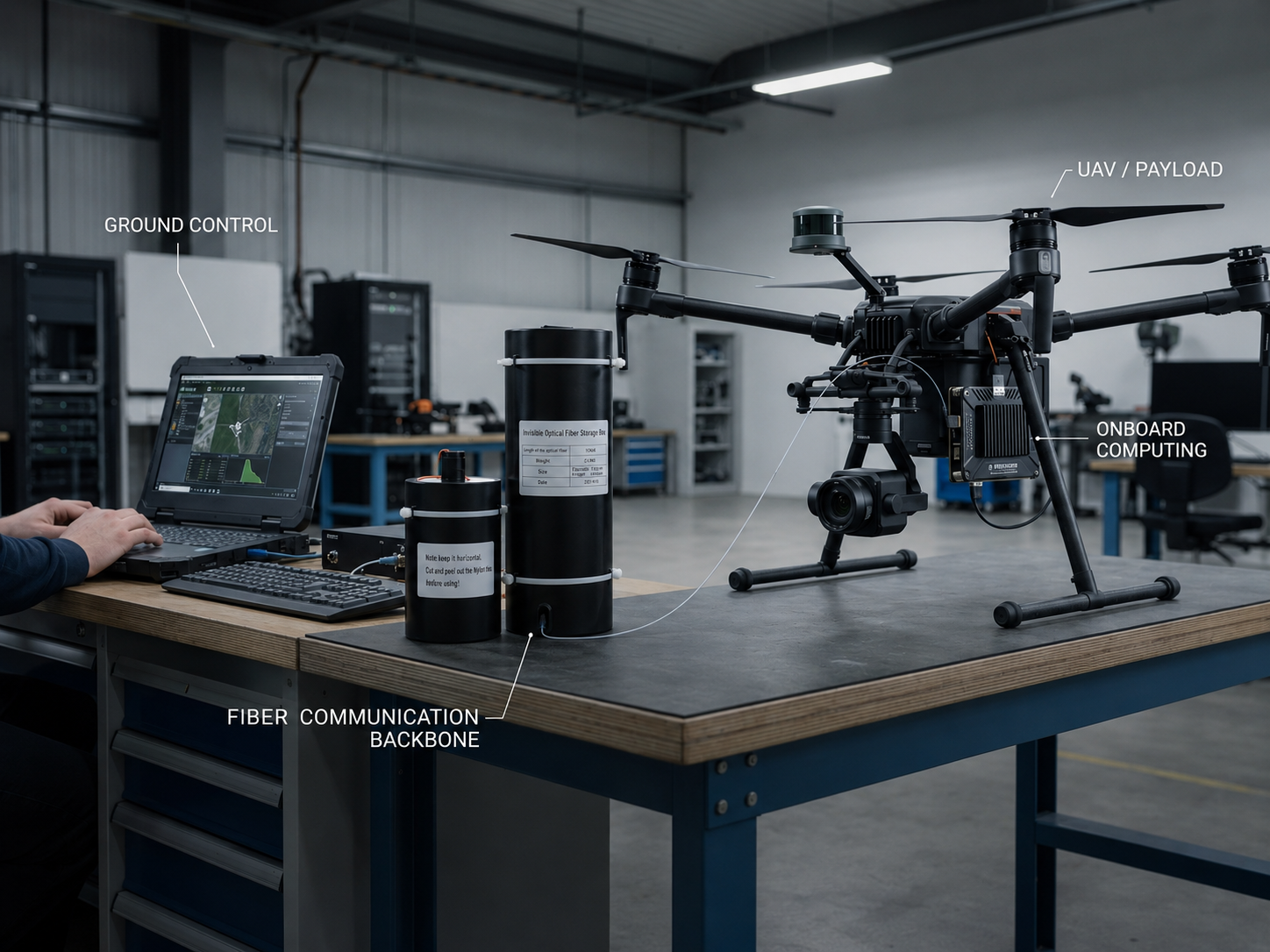
Why fiber matters as missions become more advanced
Fiber matters because advanced missions need a more dependable backbone for data and control exchange.
Its value is not that it sounds sophisticated.
Its value is that it helps reduce a category of instability autonomy cannot simply think its way around.
As missions become more automated, communication has to do more than remain active. It has to remain credible enough for the mission to rely on.
That is where fiber changes the conversation.
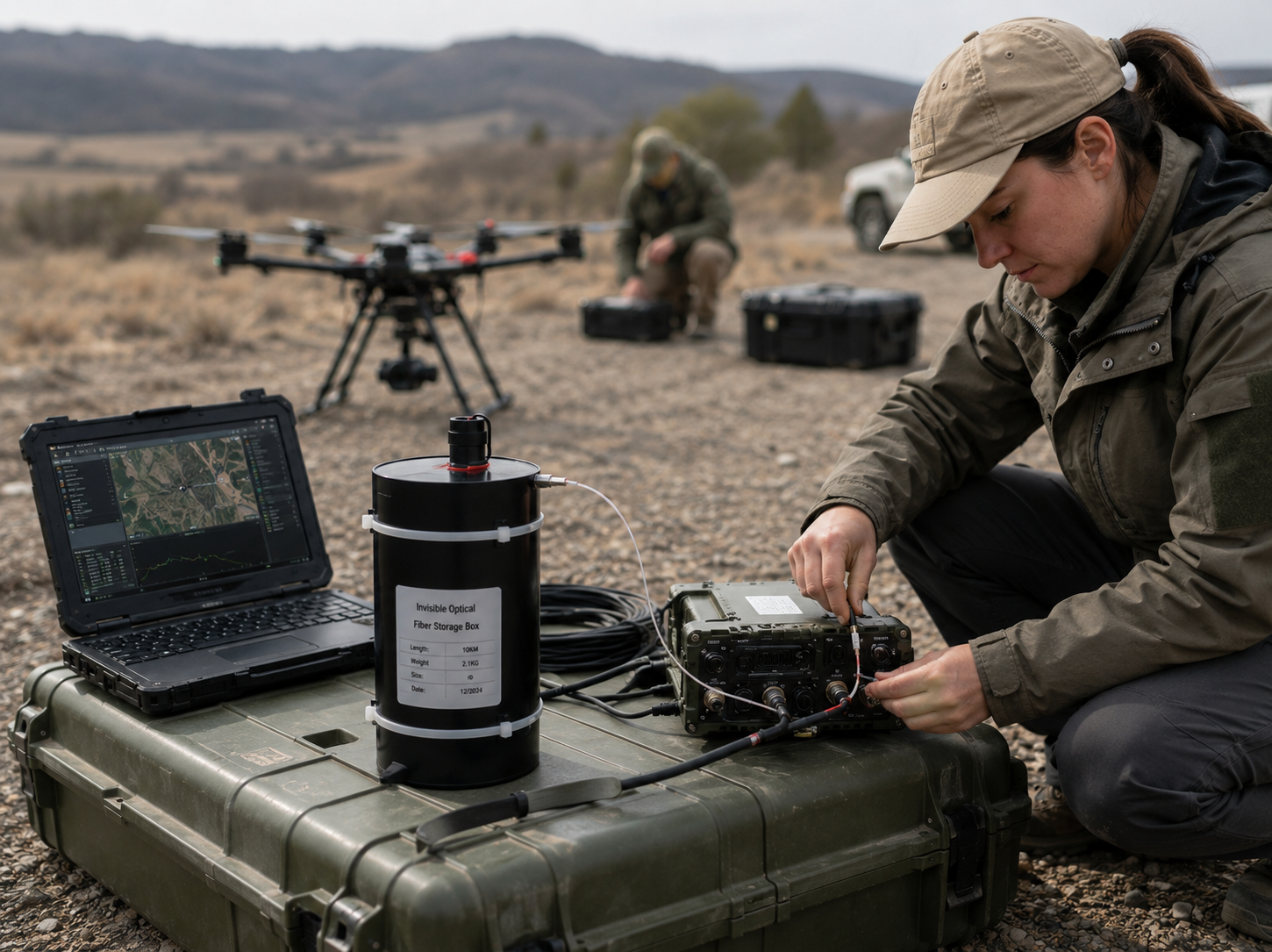
It helps move communication from a recurring source of doubt into a more stable architectural layer beneath the mission logic.
And that is what makes more advanced UAV operations more usable in the field—not just more impressive in a demo.
Where NovaLynx is different
NovaLynx is not trying to make UAVs “smarter.”
It is built to make advanced missions more operationally usable by reducing the communication instability that autonomy cannot simply solve with onboard intelligence.
That matters in control-sensitive, interference-heavy, and high-consequence environments where advanced missions are judged by execution, not ambition.
Because a mission does not become more autonomous when the aircraft is only smarter.
It becomes more autonomous when the whole system can be trusted with less human correction.
Final takeaway
If autonomy is built on fragile communication assumptions, it will always need more correction than it should.
Talk to NovaLynx about communication architecture for next-generation UAV missions.
Edited by NOVALYNX on May 2026