
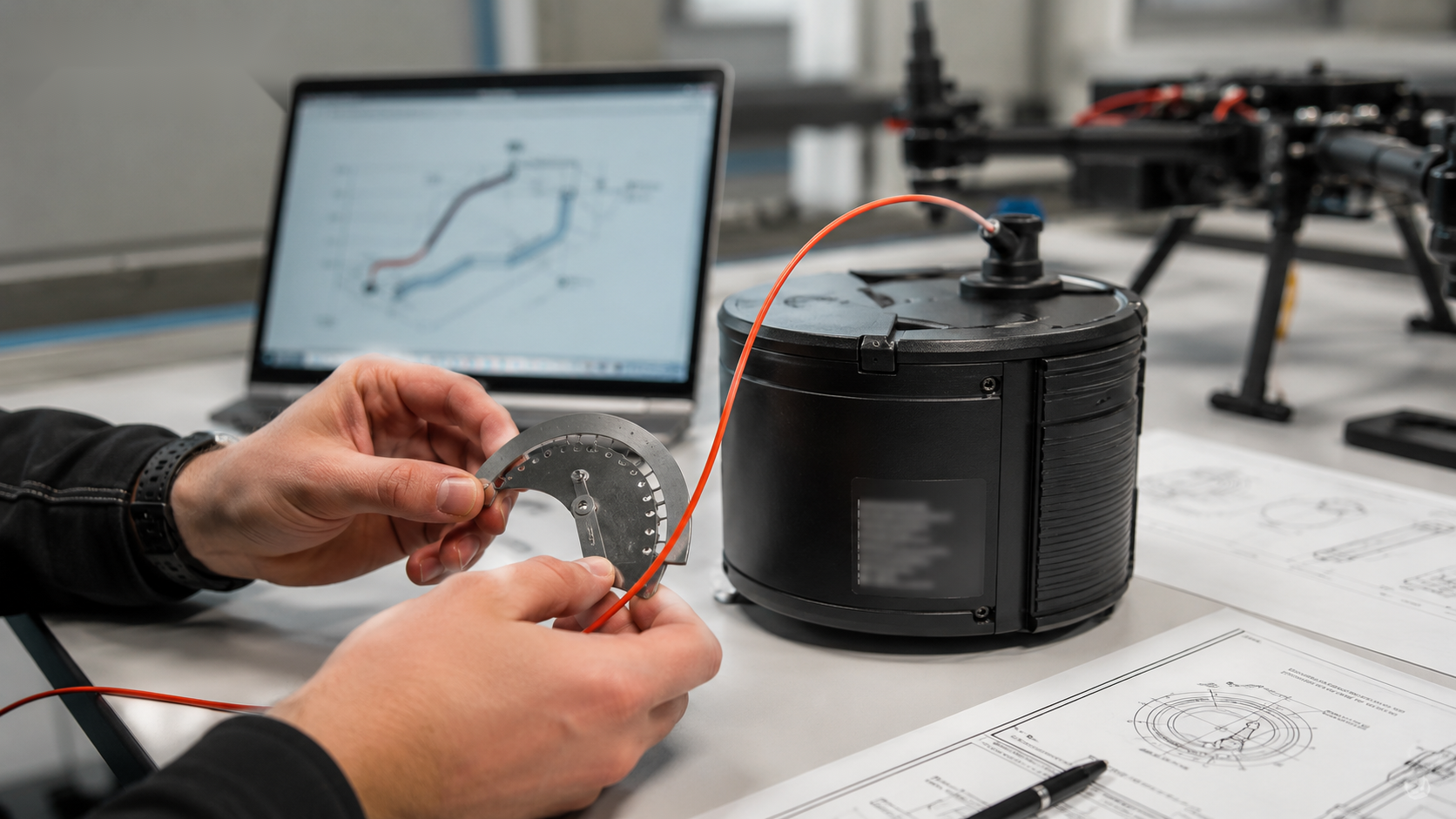
G.657A2 Is Not Deployment Proof for UAV Fiber Reels
Many UAV fiber reel buyers ask the right material question but stop before the real deployment question.
They confirm G.657A2.
They review the datasheet.
They assume the reel is ready.
That is where link margin can be misread.
G.657A2 fiber is often selected for UAV fiber reel systems because compact aircraft, small payload spaces, and tight routing paths create bending conditions that ordinary fiber may not handle well.
That selection makes sense.
But the risk is not choosing G.657A2.
The risk is treating the standard name as proof that the finished reel will preserve link margin under real deployment conditions.
The better question is: “Under what bend radius, reel winding, routing pressure, and handling conditions will this fiber actually be used?”
A UAV fiber reel is not judged only by the fiber label. It is judged by what happens after the fiber is stored, wound, unwound, routed through compact spaces, pulled during deployment, and fixed around exits, connectors, and mounting points.
G.657A2 helps. But deployment conditions decide how much value remains.
Why G.657A2 Gets Selected for UAV Fiber Reel Projects
UAV fiber reel systems face a different mechanical environment from conventional fixed fiber installations.
The fiber may need to fit inside a compact reel body. It may pass through a narrow outlet path. It may be routed near onboard structures, connectors, brackets, or protective housings. In many projects, the available space is not designed around fiber first. The fiber has to work inside the aircraft’s real mechanical limits.
This is why bend-insensitive fiber becomes attractive.
G.657A2 is commonly used where improved bending performance is required. For UAV applications, it can support compact routing, smaller storage geometry, and reel-based deployment more effectively than conventional fiber choices.
But this is where evaluations often become too optimistic.
A fiber standard describes important material behavior.
It does not automatically describe the final reel environment.
It does not show the actual bend radius inside the reel, the winding pattern, the outlet geometry, the pressure points, or the link condition after repeated handling.
For UAV fiber reels, G.657A2 is a strong starting point. It is not full deployment proof.
The Real Risk: The Standard Name Can Hide the Deployment Boundary
In many procurement discussions, G.657A2 becomes a reassuring label.
But a label does not answer the questions that matter during field use.
- What is the minimum bend radius inside the reel?
- How is the fiber wound during storage?
- Where does the fiber exit the reel body?
- Is there pressure near the outlet, connector, or fixed mounting point?
- Will the link margin still be acceptable after winding, unwinding, and real routing?
These questions define the deployment boundary.
A deployment boundary is the real condition under which the reel is expected to work. It includes mechanical routing, bend radius, reel geometry, storage condition, handling process, and the link-margin expectation for the mission.
Without that boundary, a buyer may believe the project has been evaluated because the material standard has been confirmed.
In reality, only part of the risk has been checked.
Bend Radius Is a Boundary, Not a Minor Detail
Bend radius inspection at the reel outlet helps buyers understand why G.657A2 fiber still needs to be reviewed under real deployment conditions.
Bend radius is often treated as a technical parameter.
For UAV fiber reels, it should be treated as a deployment boundary.
The fiber does not operate in theory. It operates inside the reel, around the outlet, through the aircraft structure, and along the deployment path.
Even when bend-insensitive fiber is used, bending behavior can still depend on real conditions such as bend radius, number of turns, cable structure, pressure, wavelength, and handling.
This is why a clean material specification alone is not enough.
A reel may use the right fiber type but still create risk if the winding condition is too aggressive, if the outlet path creates a sharp transition, or if routing pressure appears around a compact mounting point.
The issue is not whether G.657A2 has value.
It does.
The issue is whether the reel design and deployment condition allow that value to remain available during use.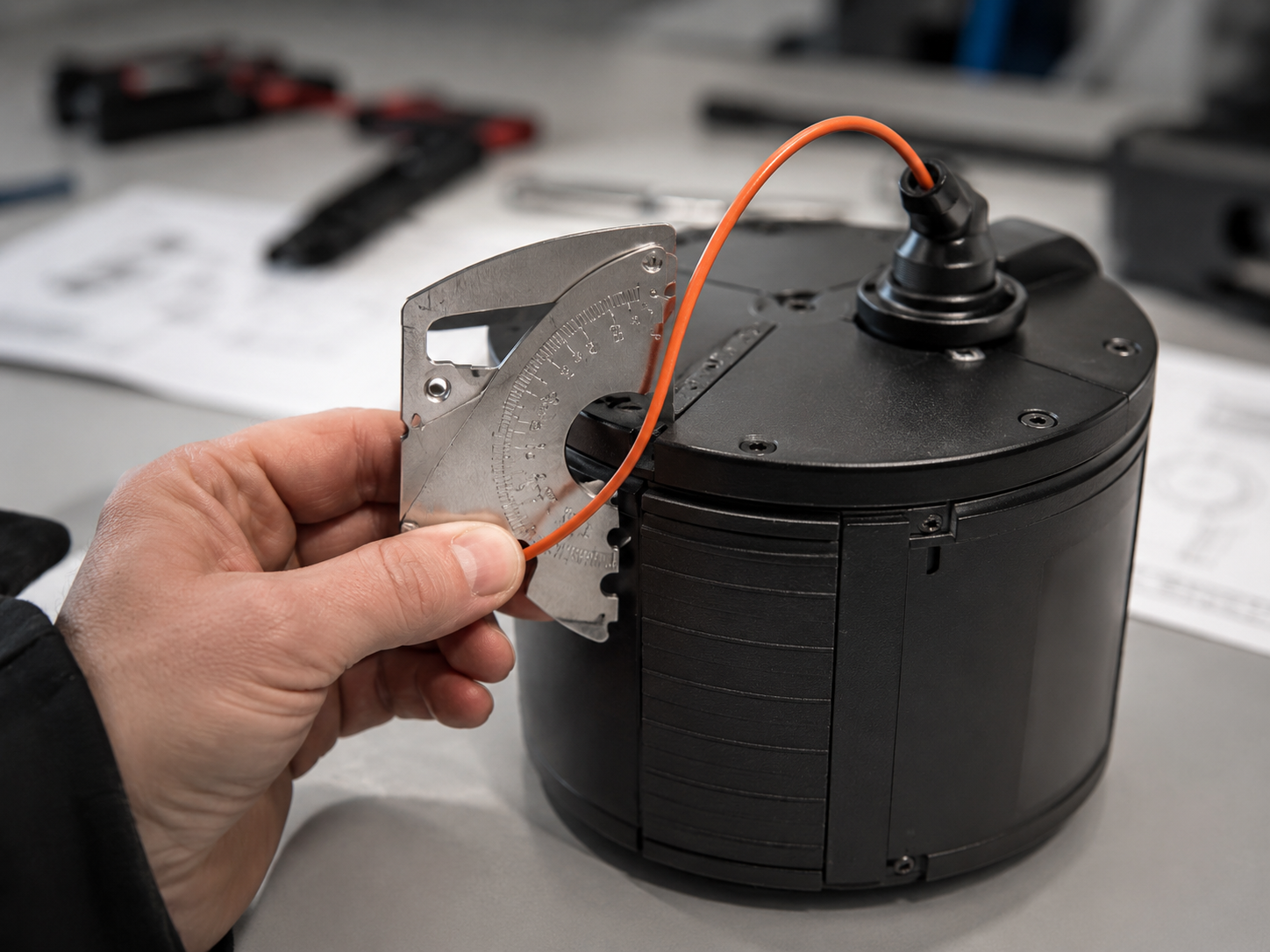
Where Link Margin Can Be Misread
Link margin is often evaluated too early.
A team may look at attenuation, distance, connector count, and transmission requirements, then assume the link has enough room.
But UAV fiber reels add another layer.
The optical path may look acceptable before the fiber is wound into the reel. The system may pass a basic check before it is routed into the aircraft. The link may appear stable before the reel experiences storage, payout, compact routing, or repeated handling.
That does not mean the system is wrong.
It means the evaluation is incomplete.
For long-range UAV projects, this matters even more. Longer distances already reduce available margin. If the same project also involves compact routing, tight reel geometry, or field handling pressure, the margin should not be judged only from the fiber standard name.
A small mechanical issue can become a larger communication risk when the project has less margin to absorb it.
This is why UAV fiber reel buyers should ask for the reel condition, not only the fiber type.
A Practical Deployment Boundary Check for UAV Fiber Reel Buyers
Before choosing a G.657A2 fiber reel configuration, buyers should review the real deployment environment around the reel.
| Buyer Question | Why It Matters |
|---|---|
| What is the actual minimum bend radius? | The datasheet does not show the installed routing path. |
| How is the fiber wound inside the reel? | Reel geometry can affect the mechanical condition of the fiber. |
| Where does the fiber exit the reel? | Outlet pressure can become a weak point. |
| What happens after winding and unwinding? | Bench checks may not reflect field handling. |
| How much link margin remains? | Long-range UAV projects have less room for misjudgment. |
The buyer does not need to become a fiber design engineer.
But the project team should understand whether the reel configuration matches the expected deployment requirement.
That means checking the stored fiber condition, the outlet path, the aircraft-side routing, the connector area, and any compact mounting zone where pressure or tight bending may appear.
This is the difference between buying a fiber label and evaluating a usable reel configuration.
How NovaLynx Frames G.657A2 Selection for UAV Reel Deployment
NovaLynx connects material confidence, source traceability, QC inspection, and deployment-boundary review for UAV fiber reel projects.
NovaLynx does not treat G.657A2 as a standalone promise.
For UAV fiber reel projects, the fiber choice should be connected with reel deployment, bend-radius control, routing pressure, source traceability, QC inspection, and link-margin expectations.
That means the discussion should include more than a material name.
It should include where the fiber comes from, how the reel is configured, how the fiber is routed, where pressure may appear, and whether the selected configuration matches the expected UAV deployment condition.
NovaLynx can also connect this deployment discussion with material transparency and pre-shipment inspection.
For projects that require clearer sourcing confidence, NovaLynx can support YOFC G.657A2 fiber selection, source traceability, and percentage-based QC inspection before shipment.
Bend-radius control, reel geometry, routing pressure, and link-margin review help reduce deployment uncertainty.
Both matter, but they answer different questions.
This approach is especially important for compact UAV platforms, long-range UAV projects, and onboard fiber deployment systems where space is limited and communication continuity matters.
The goal is not to claim that one fiber type removes all bending risk.
The goal is to help the buyer understand the deployment boundary before the reel is selected, installed, or validated.
That is where NovaLynx can provide value.
Not by saying:
“This is G.657A2, so the problem is solved.”
But by helping the customer ask:
“Does this G.657A2 reel configuration match the bend, routing, and link-margin conditions of the actual UAV project?”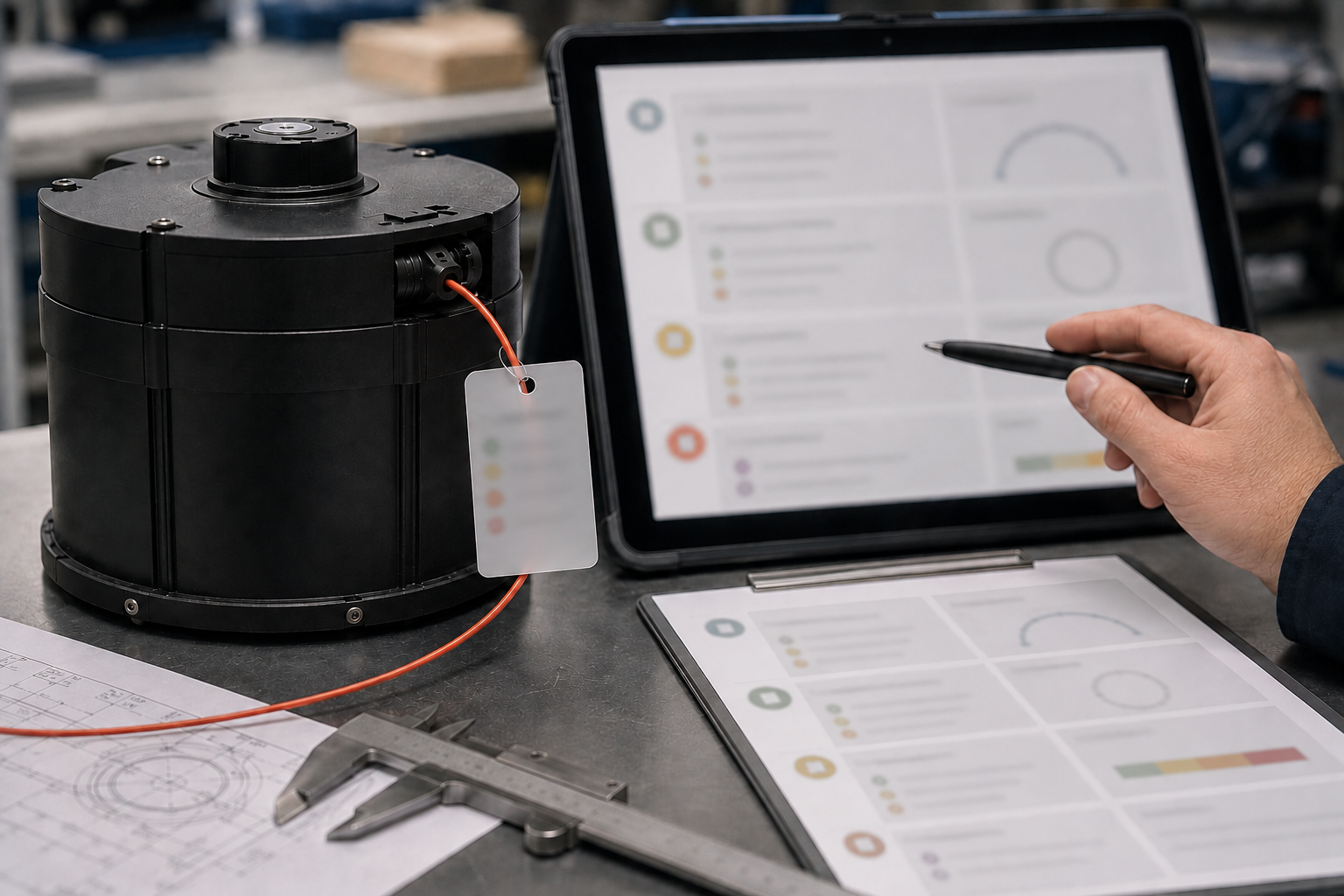
The Better Procurement Question
For UAV fiber reel buyers, the better procurement question is not only:
“Is it G.657A2?”
The better question is:
“What deployment boundary was considered when this reel configuration was selected?”
That question changes the evaluation.
It moves the discussion from a material label to a system condition. It helps buyers avoid assuming that bend-insensitive fiber automatically protects the finished reel under every storage, routing, and payout scenario.
The deployment boundary tells you whether the reel configuration is ready for the mission.
Review the Reel Boundary Before Field Use
Before choosing a UAV fiber reel configuration, send NovaLynx your expected reel layout, routing path, deployment distance, and bend-radius constraints.
NovaLynx can help review whether the G.657A2 reel configuration matches your UAV deployment boundary before field validation.
A useful deployment review may include:
- Expected reel layout
- Bend-radius conditions
- Compact routing pressure
- Outlet and connector protection
- Link-margin expectations
- Deployment and handling requirements
- Source traceability and percentage-based QC requirements
Request a UAV Fiber Reel Deployment Review before your next field validation.
FAQ
Is G.657A2 enough for UAV fiber reel deployment?
G.657A2 is a useful fiber choice for compact routing and bending-sensitive applications, but it should not be treated as complete deployment proof. UAV fiber reel buyers should also check bend radius, reel winding, routing pressure, source traceability, QC inspection, and link-margin expectations.
Does G.657A2 eliminate bend loss in UAV fiber reels?
No fiber standard should be treated as a guarantee of zero bend-related loss under all conditions. G.657A2 can help reduce bend-related risk, but actual performance still depends on the deployment environment, reel geometry, routing pressure, handling conditions, and link-margin requirements.
Why does bend radius still matter if the fiber is G.657A2?
Because the fiber still operates inside a real mechanical system. The bend radius inside the reel, at the outlet, near connectors, and along compact aircraft routing paths can affect the final link condition.
Can reel winding affect UAV fiber link margin?
Yes. Reel winding can affect the mechanical condition of the fiber. Reel diameter, winding pattern, storage tension, payout behavior, and repeated handling may all influence how the fiber behaves in the finished system. Specific loss behavior should be confirmed under the expected deployment condition.
Why does source traceability matter for UAV fiber reel buyers?
Source traceability helps buyers understand where the fiber comes from and whether the supplied material matches the expected specification. For UAV fiber reel projects, traceability and QC inspection support sourcing confidence, while bend-radius and deployment-boundary checks support field-use confidence.
What should UAV fiber reel buyers check before deployment?
Buyers should check the actual minimum bend radius, reel geometry, winding condition, outlet path, connector area, compact routing pressure, source traceability, QC inspection requirements, and whether link margin remains acceptable under the expected field-use condition.
How can NovaLynx help with G.657A2 reel deployment?
NovaLynx can help buyers connect G.657A2 fiber selection with reel deployment conditions, bend-radius control, compact routing constraints, source traceability, percentage-based QC inspection, and link-margin expectations before field validation.