
menu
close
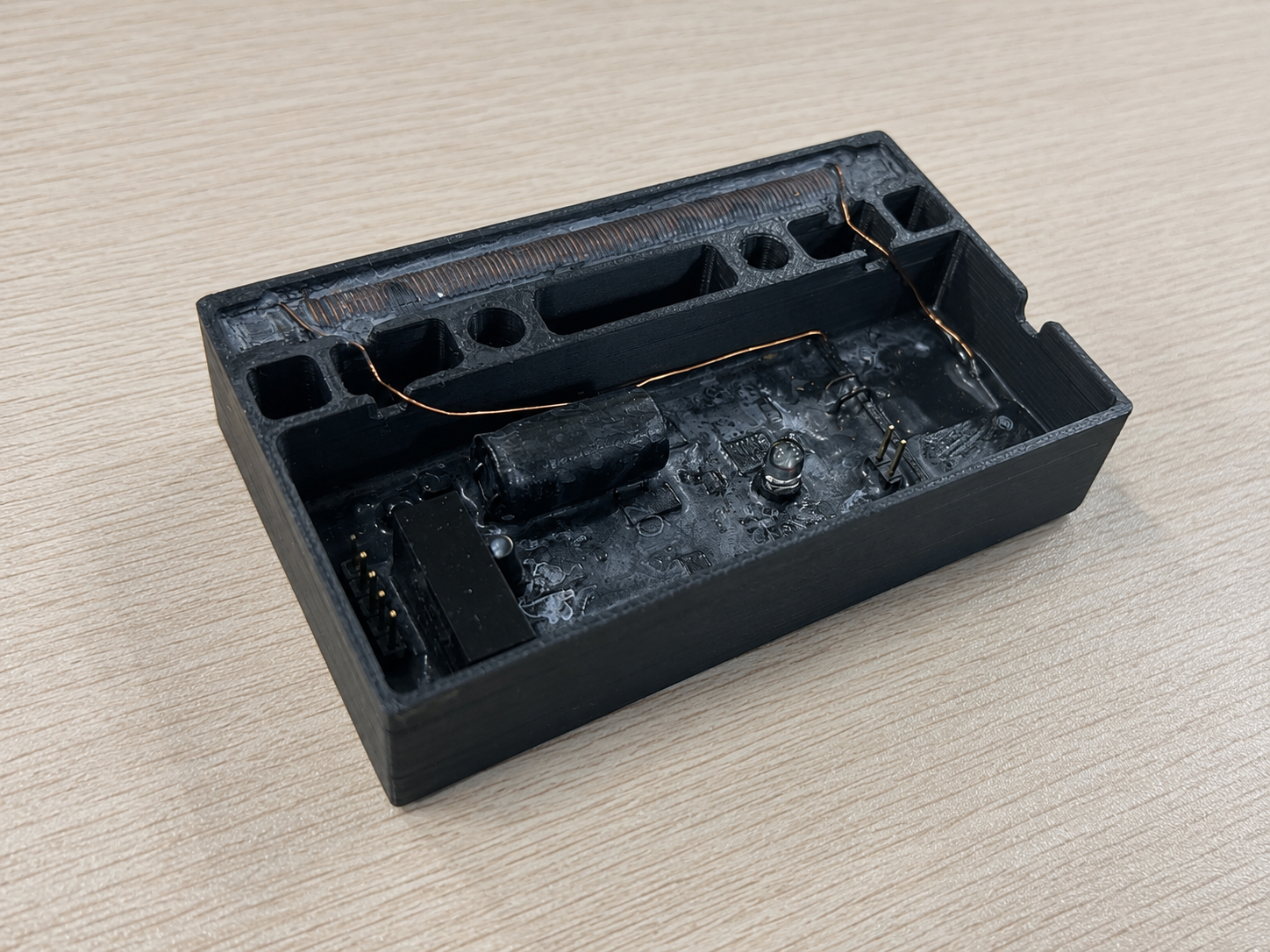
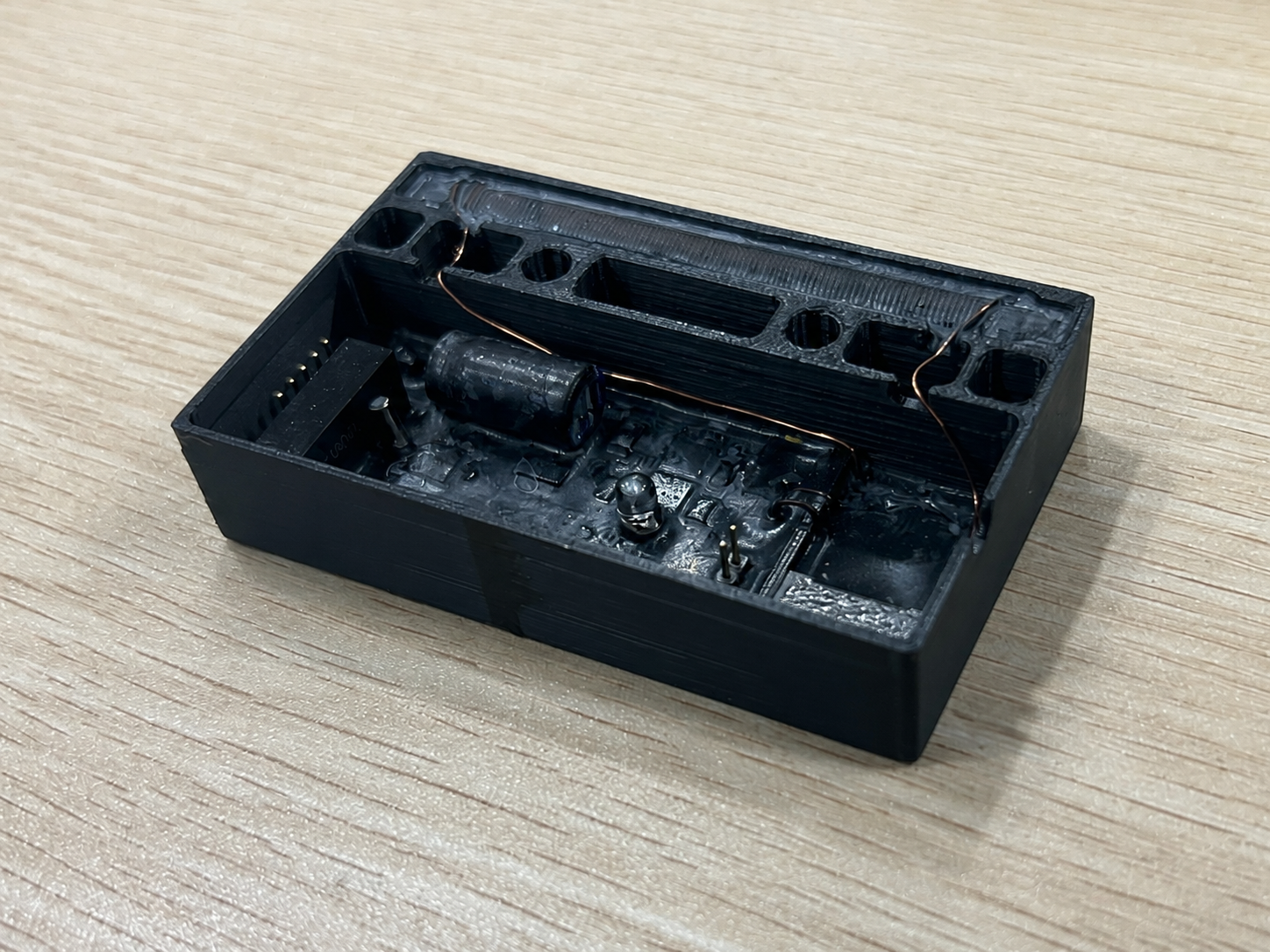
The NovaLynx LFMC-V4 is an engineering evaluation module designed to assess short-range, low-rate data transmission through a magneto-inductive communication link.
Connected to a host controller through UART, the module can be evaluated for control commands, telemetry, sensor readings, device status, alert signals and recovery data in selected underwater, underground, confined and RF-limited environments.
| Link role | Control, telemetry, sensor, status, alert and recovery data |
| Host interface | UART |
| Communication mode | Half-duplex |
| Current link rate | 500 bps |
| Typical evaluation range | 10–15 m, subject to test conditions |
The transmitting module converts digital data from the connected host into a controlled alternating magnetic field. The receiving module detects the magnetic-field variation, demodulates the signal and outputs the recovered data through UART.
The current LFMC-V4 operates as a half-duplex link. Each unit can perform transmitting and receiving functions within the communication process.
The current evaluation module can be reviewed for the following low-rate communication roles:
The current LFMC-V4 is positioned for low-rate data transmission rather than broadband video or high-throughput networking.
| Communication principle | Near-field magnetic induction |
| Communication mode | Half-duplex |
| Link data rate | 500 bps |
| Typical communication range | 10–15 m |
| Host interface | UART |
| Default host UART baud rate | 115200 baud |
| Power supply | 5 V DC |
| Normal power consumption | 2.5 W |
| Standby power consumption | 100 mW |
| Dimensions | 95.3 × 60.7 × 23.9 mm |
| Weight | 160 g |
| Product stage | Engineering evaluation / testing mode |
Note: Specifications reflect the current engineering evaluation unit. Actual link performance may vary with coil orientation, spacing, installation geometry, operating medium and surrounding electromagnetic conditions.
Magneto-inductive communication is sensitive to the relative orientation of the transmitting and receiving coils. The LFMC-V4 produces a directional field pattern, and partial blind zones may occur when the modules are positioned unfavorably.
For initial evaluation, the two modules should normally be positioned approximately parallel. Perpendicular placement may significantly reduce signal strength. Adjusting the angle of one module may help restore the link when it enters a blind zone.
The current LFMC-V4 is not positioned as a broadband video system, a long-range replacement for RF, a universal through-material communication link, or a direct substitute for fiber-optic or acoustic communication.
NovaLynx reviews the required data type, operating medium, communication distance, installation geometry, host interface, available power and platform constraints before recommending a communication path.
Share your operating environment, required communication distance, data type, interface and platform constraints. NovaLynx will review whether a magneto-inductive, fiber-optic or hybrid communication path is more appropriate.
Discuss Your Application